Total Pageviews

Popular Posts

Saturday, August 28, 2010

Terrorist Acts in Calicut

27 comments
Calicut is in the news for all the wrong reasons.  There was a series of bomb blasts in the city a couple of years ago. The peace-loving citizens of Calicut thought it was some amateurish attempt to attract attention. There were, of course, some lone voices warning about militancy gaining ground. The Calicut Corporation promptly passed a resolution against terrorism. But then, didn’t our Corporation pass a resolution condemning US invasion of Iraq and the hanging of Saddam Hussein?
We were jolted out of complacency when the alleged kingpin of these activities was caught in faraway Dhaka and he started singing. It appears some of these outfits had been active in the city for some time. And not only the Calicut blasts but even the Bangalore and possibly some more blasts in South India were perhaps planned in our Calicut!
It is not that terrorist activities were totally unknown to Calicut. One of the earliest recorded acts of terrorism in Calicut was the assassination of the Malabar Collector, H.V. Conolly in 1855. A few convicts who had escaped from the jail, plotted to do away with the Collector. It is not clear what motivated them: some say it was because he was instrumental in acquiring large tracts of agricultural land for his ambitious canal project which is now named after him; another explanation is that he was harsh in implementing the law promulgated in 1854 providing for stringent punishment including fining of entire localities in case of outrages.also  Mr. Conolly had taken the initiative for negotiating the voluntary exile of Syed Fazal Pookoya Thangal (Mambram Thangal) to Arabia, as the latter was suspected of being the rallying point for fanatics.   Anyhow, that act of terrorism deprived Malabar of one of the most sagacious and sympathetic administrators.
But, the most serious act of terrorism in recent times in Calicut was staged in 1942, when the Quit India movement was at its peak. This little known incident, which is unfortunately still called after the criminal case  (Keezhariyur Bomb Case) which led to the conviction of 27 accused to long terms of imprisonment, deserves a place in the history of India’s freedom movement as much as the Alipur Conspiracy Case.
The formation of the Congress Socialist Party (CSP) in 1934 as a caucus within the Indian National Congress gave an opportunity for the Communists to implement their agenda of implementing the ComIntern strategy. In many states like Kerala, the Communists dominated the Indian National Congress (INC) through their control of CSP. The strategy was exposed in 1942 when the call for Quit India movement attracted a lukewarm response from Malabar. This was because the Communists, who were originally opposing the imperialist Britain, turned overnight their supporters after Soviet Russia had joined the War against the Axis powers in June 1941.
The British administration had taken pre-emptive action in arresting all the top leaders of the INC in Malabar well before the Quit India call was made. The vacuum was filled by some young Congress workers who constituted themselves into a Socialist group. Led by the young and dynamic Dr.K.B.Menon, this group of young men from Bombay – N.A.Krishnan Nair, V.A.Kesavan Nair, C.P.Sankaran Nair and Mathai Manjooran – provided the leadership for the movement in Malabar.
E.Vasudevan Nair who had left
his medical studies to join the conspiracy
Dr.Konnanath Balakrishna Menon (1897-1967) is described by Nossiter as ‘a neglected figure’. Trained as an academic economist with a doctorate from the University of Berkley, California, he was teaching in Harvard where he met Jaiprakash Narain who had joined there as a student. Under JP’s influence, Menon decided to return to India and work as the Secretary of the All India State People’s Conference and a Human Rights body of which Nehru was the Chairman. He also spent two years with Gandhiji before he became disillusioned with the non-violent philosophy and landed in Calicut in the wake of the Quit India agitation.


Kollom-where the bombs were stored
Koilandy Railway Station - one of the targets
The conspiracy hatched in Koilandy (Calicut) was to mark November 9th, 1942 (subsequently shifted to 17th Nov. as the bomb-making was delayed) as the ‘Sabotage Day’ by staging a series of blasts to damage government buildings, railway lines and other installations. Bombs were originally fabricated by the ‘weapons expert’, Narayanan Nair at Keezhariyur, a sleepy village in Koilandy Taluk on the banks of the Akalappuzha River. But, when it was suspected that the Police had got wind of the conspiracy, the bomb making was shifted to Parappanangadi. Manufactured bombs were transferred and stored in the office of the Charkha Club in Kollom, Quilandy. But at some stage, a few bombs were stolen and used by some of the participants to settle private scores.
The Police had already got wind of the conspiracy, alerted by some Communist agents among the conspirators, and were lying in wait for the climax which was to be the bombing of the Koilandy Railway Station and the Registry. (Ironically, one of the participants, E.Vasudevan Nair from Kollom was the son of a Registrar!) It was the duty of Kurumayil Narayanan to shift the bombs from Kollom to the team from Kunnathara who were waiting at the Railway Station to plant the bombs. The Police, alerted by the Communists, were of course waiting to pounce on the saboteurs.
It was a long wait for all the parties – the bombs did not reach the Kunnathara team. Narayanan’s explanation was that they dozed off at the Charkha Club and when they woke up, it was day! Some charge the Kollom team with having developed cold feet. However, the Police had no difficulty in nabbing most of the conspirators, except for Mathai Manjooran, T.P.Kunhirama Kidave ( the son of K.Kelappan, known as ‘Kerala Gandhi’), M.A. Sadanandan, O. Chekkutty and Verkott Raghava Kurup, who went underground.
The trial started in the court of the Sessions Judge Mr. A. A. T. Coelho on 14th February 1944. The following 27 accused were tried apart from the five absconding: Dr.K.B.Menon, C.P.Sankaran Nair, N.A.Krishnan Nair, V.A. Kesavan Nair, D. Jayadeva Rao, O. Raghavan Nair, Karyal Achuthan, E. Vasudevan Nair, N.P. Abu, K. Narayanan Nair, K. Kelukkutty, T. Pachar, K. Narayanan, K. Kunhiraman, Unnikkutty, Cheriya Kunhiraman, K.V. Chamu, V.Prabhakaran, K. Mohammed Naha, P. Mammootty, V. Abdullakoya Thangal, S.N. Valliyil, V. K. Achuthan Vaidyar, K. Gopalan, C. Damodaran, K.T. Alavi  and C. Choyunni.
It was a sensational trial keenly watched by people of Malabar. The accused got legal and financial support from various quarters including the Mathrubhumi newspaper (which formed a committee to defend the accused), M.R. Masani (who mobilised funds from Bombay) and K. Bhashyam who made similar fund-raising in Madras. A galaxy of lawyers including K.T. Chandu Nambiar, M. Narayana Kurup, K.G. Nair, P. Govinda Menon, K. Kunhirama Menon, K.V. Krishnan and Mahadeva Iyer offered to defend the accused without charging any fee.
The Judge found 13 accused guilty and let off the rest. Among those guilty, one was awarded imprisonment for 10 years and the rest for 7 years of rigorous imprisonment. On appeal by the prosecution, the punishment was enhanced by the Madras High Court to 10 years of imprisonment in respect of the entire ‘Bombay gang’ comprising K.B. Menon, N.A. Krishnan Nair, V.A. Kesavan Nair and  C.P. Sankaran Nair. The punishment in respect of others was upheld.  They were let off in 1946 when the interim Congress Government took over as a prelude to granting independence.
Many of the young men who took part in the conspiracy were either students (including one who was studying for medicine) or had bright careers ahead of them. They had given up their future for the sake of freedom of the country. Many who were let off after Independence were not suitably rehabilitated, apart from the meagre pension for freedom fighters. Several faded into oblivion, taking with them the dreams and aspirations of their families. We salute their spirit of sacrifice! 


Read more ►

Monday, August 16, 2010

Calicut - about a Hundred Years Ago

13 comments
S.K.Pottekkatt courtesy Wikipedia

The colonial writers of the 19th and early 20th century like Logan and Evans-Innes have left detailed descriptions of the province of Malabar during their time. But, as administrators dealing with issues of land revenue and conflicts, they have not provided much in terms of a description of Calicut town. It was left to the adorable writer, S.K.Pottekkatt to give us a sketch of the vibrant life of the town in his Oru Theruvinte Katha (The Story of a Street). A grateful city has honoured him by putting up a giant bust of the author on the northern end of the Sweetmeat Street (Miththayi Theruvu) whose chronicle he had recorded in all its starkness.
We give below a description of the author’s childhood memories of Calicut during the 1920s. This is extracted from an article he wrote for the daily Mathrubhumi published in 1978:
Calicut of today (1978) is not very different externally from the town in my childhood memories (1920). In fact, if Vasco da Gama were to land here again, he would have no difficulty in finding his way to the Zamorin’s Palace.
Varakkal (West Hill) those days housed the barracks of the European soldiers. Local teams and European teams would often play football and hockey matches at the Mananchira playground.
The ‘Mission Shop’ (Commonwealth Trust) was also known as the German Shop. It had been seized by the British during the First World War and run as the Commonwealth Trust. The southern and north-eastern side of Mananchira – which was the heart of Calicut – was in possession of the Germans.
To the east of Mananchira (where an educational office and text book store stand today ) was a hospital. Attached to it was the Medical College (School?) I would be scared to look at the skeletons which used to be hung in the open from a jackfruit tree in the compound. One wondered why they had to display the scary skeletons, meant for the anatomy lessons of medical students, in the open rather than store safely in a room.
Muthalakkulam was then also the centre of activities for the washer men of the town. East of this ground was a large garden of jasmine. To its south, opposite the Women and Child Hospital, there was a coffee plantation. An abattoir stood to the south of the W&C Hospital.
The road to the east of the vegetable market in Palayam led one to a marshy land where buffaloes were kept in sheds. There was extensive sugarcane cultivation to the north of the Sreekantheswara Temple, where the present Mavoor Road is laid.
A ‘red light area’ functioned to the south of the present Polytechnic, catering to the European soldiers of West Hill barracks. Another centre for prostitution was near the third Railway gate. In fact, prostitution was known locally as ‘third gate’. Palayathe Kuttippennu was a notorious prostitute of those days and many were the salacious stories circulating about her.
The Calicut of old was much more colourful. Even now we find a few Arab traders landing here in country boats and pattemmaris. But in the olden times Arabs would come by the hundreds – coal black giants in long gowns and tight caps. It was fun to watch them move around the streets in groups, eating from the bunch of plantains which one of them would be holding. They would usually descend during the summer.
Kabuliwallahs also would come in groups and would camp in the outskirts of the town in tented colonies. They used to hawk things like knives, scissors and stone garlands on the streets of Calicut. Their women, who wore colourful skirts and shirts with a yellow bandana tied on their foreheads, were stout but unalloyed beauties. But they could also be violent at times. I still remember how one such female caught hold of a handsome 16 year old boy in my neighbourhood and molested him till he fainted!

How Calicut has changed! The two oil price hikes of 1973 and 1979 had led to sudden prosperity in the Middle East and many residents of Calicut got employed there. Their remittances led to so much investment in the city, transforming the sleepy town of Pottekkatt’s to a bustling metropolis. Unfortunately, all this activity has also led to the destruction of many heritage structures in the city. If he were to return to Calicut today, Pottekkatt himself would not be able to find his way to his house, Chandrakantham in Puthiyara!!
Read more ►

Tuesday, July 27, 2010

Mambram Thangal and Mahatma Gandhi

8 comments
When Mambram Pookoya Thangal had challenged British authority in the 1840s, his followers had believed that he was invested with powers to perform miracles. It was even said that he could stop the British bullets with his bare hands and that on his orders the guns of the soldiers would be silent. A similar folklore was spread during the Khilafat movement in 1921 in an effort to boost the morale of those fighting the British. Surprisingly, this folklore was not confined to Ernad or Valluvanad and similar stories could be heard wherever Khilafat volunteers were arousing the people. The central character would change but the miraculous powers remained more or less the same.

Old Memorial at Chauri Chaura
Courtesy:www.chaurichaura.com
History tells us that Mahatma Gandhi persuaded the Calcutta session of the Congress to adopt the non-cooperation movement and that it was formally launched in August 1920. The Khilafat Committee which had met in Lucknow agreed to join hands and make their agitation part of the larger non-cooperation movement. 

We also know that Gandhiji decided to call off the non-cooperation movement after the unfortunate violence at Chauri Chaura on 4th February 1922. What history does not highlight is that the Chauri Chaura event was very much a Khilafat agitation. ( What follows is taken from the judgement of the Allahabad High Court in an obscure case named Abdullah vs The Emperor,  Criminal Appeal No.51 of 1923 in which the perpetrators of Chauri Chaura were tried and convicted.)

Evidence given before the Court by many witnesses speaks of two Musalmans having visited the village (one wearing spectacles and the other having a beard) who sang songs of the brave deeds of Shaukat Ali and Mohammed Ali.  After this, all the volunteers who were about three thousand, got up and started from there crying out, Mahatma Gandhi ki jai’.
‘We take it that there was perceptible in the spirit of this crowd (which was marching towards Chauri Chaura Police Station) that sort of magnetic force which the ancient Greek ascribed to supernatural influence, and which has often been noted as emanating from an army destined to be victorious in an impending encounter’. (What a classic description of the haalilakkam!)
The judgement continues: ‘Psychologically, it has its basis in the recognition on the part of each member of the force that those around him are animated by the same resolution which he feels in himself; he knows that if he elects to go forward, he will not go forward alone’.
But how does all this connect with Mambram Thangal and his powers to perform miracles? We need to go back to the judgement for evidence. If it was the utter lack of tact and strategic thinking on the part of Collector Thomas which had led to the massacre in Tirurangadi, it was similar tactlessness and boorishness on the part of Sub Inspector Gupteswar Singh that ended in the tragic events in Chaura where he and other 22 members of the force (including village chowkidars) lost their lives.
From the Judgement: ‘The firing of the first volley in the air was met by the cry that Mahatmaji Gandhi was working miraculously in favour of the volunteers and was turning bullets to water. We have plenty of evidence on this record as to the wide-spread belief in this gentleman’s miraculous powers. We have no doubt that such a cry was raised and that it put the finishing touch to the resolution of the mob’.
grandson of accused Lal Mohammad
courtesy:www.chaurichaura.com
In an obiter dictum the Allahabad High Court Judgement (delivered by the Chief Justice Sir Grimwood Hears Kt. , and Mr.Justice Piggot on April 30th, 1923) reaffirms the culpability of Gandhi and his miracles: ‘The appellants are in the main ignorant peasants; the great majority of them were drawn into the business by misrepresentation of facts and preposterous promises concerning the millennium of ‘swaraj’ the arrival of which was to be forwarded by courage and resolution on their part. Some indeed were apparently influenced by the belief that Mr.Gandhi was a worker of miracles. We cannot take leave of the case without an uneasy feeling that there are individuals at large at this moment, men who have not even been put on their trial in connection with this affair, whose moral responsibility for what took place at Chaura Police Station in the afternoon of February 4th 1922, is at least equal to that which rests upon such men as Nazar Ali and Lal Mohammad, who acted as leaders openly, in the light of the day and at least placed their own lives on the hazard along with the rest’.
The irony was that when the judgement was being delivered, Gandhiji was serving a prison sentence  for his role in the non-cooperation movement. Another interesting tidbit is that Pandit Madan Mohan Malaviya, who had opposed the non-cooperation resolution in the Calcutta session of the Congress on the ground that it could lead to large-scale violence, was the lawyer who unsuccessfully defended the 225 persons who were put to trial in the Chauri Chaura Case. 19 ring leaders were sentenced to death, 113 for transportation for life to the Andamans and the rest acquitted.
What history does not tell us is how Gandhiji was suddenly jolted into action after the loss of 23 lives in Chauri Chaura and called off the movement when six months before this event, many more innocent lives had been lost in Malabar on the same Khilafat cause? As Gandhi wrote, explaining his decision to call off the non-cooperation movement, ‘God spoke clearly through Chauri Chaura’. Perhaps, God was less coherent in Malabar! Sir C. Sankaran Nair wrote about Gandhi in his book Gandhi and Anarchy (1922 ) : Mr. Gandhi, to take him at his best is indifferent to facts. Facts must submit to the dictates of his theories.

Ref: 1. Judgement in the case Abdullah vs Emperor Criminal Appeal No. 51 od 1923, Allahabad High Court, reported in Indian Cases, Vol 92 www.archive.org
2.  Mahatma Gandhi: Selected Political Writings edited by Dennis Dalton (1996)
3.www.chaurichaura.com
4. Sir C. Sankaran Nair : Gandhi and Anarchy,  Mittal Publications, New Delhi

Read more ►

Monday, July 5, 2010

Calicut's E&S Company

17 comments
Senior citizens of Calicut would recall that the tea dust they bought some half a century ago used to come in large plywood chests and was dispensed by the retailer in pounds or its fractions. These tea chests had on its sides a string of letters stencilled in black, indicating the plantation from which the merchandise came, the date of packing and the wholesale price and the company that supplied it, in bold -E&SJCWS


Buyers would, of course, recognise the first two letters, for E&S was a reputed company in Calicut and provided employment to thousands in their plantations, tea factories and other businesses. Like many other colonial institutions, E&S has also vanished from Malabar scene without leaving a trace.


How did this unlikely name become a household name in Malabar and much of South India? It takes us back to the history of co-operation. It is recognised that the first co-operative was launched by 28 flannel weavers who came together in 1844 in Rochdale, Greater Manchester. Soon the Co-operative Wholesale Society (CWS) movement took shape and the English CWS was formed in 1863-64. Starting with the business of wholesale merchanting, these CWSs expanded to cover every item of business from production to retailing. It also dabbled in banking and insurance. At one time, the English CWS owned 174 factories in different parts of England and Wales. Similarly, the Scottish CWS owned 56 factories and employed 13000 workers. In the pre-world war years these two CWSs came together to form the English and Scottish Joint Co-operative Wholesale Society (E&SJCWS). 

The Society did a commendable job during the years of the First World War in holding the price in Britain by ensuring adequate supply of consumer goods. Perhaps as recognition of this good work, it was permitted to acquire more than 32000 acres of tea plantation in South India and Ceylon in 1920. Thus came into existence the largest player in tea production and trade in the east which at one time had controlled almost one sixth of the tea import into Britain and was competing with private players like Brooke Bond and Lipton.
The Co-operative had its own printing press at Longsight, Manchester which brought out many items advertising its tea. The pictures above are the covers of playing cards promoting its tea, produced by the Manchester Press.

We could not trace any remnant of the E&S Company in Calicut. We are, however, sure that many readers would have their own reminiscences of the Company which was once part of many Malabar families. It is reported that most of its tea estates in Kerala and Tamil Nadu were taken over by the Parry Agro Industries Ltd.
Read more ►

Monday, June 28, 2010

FOR PEPPER AND CHRIST - A Fictional History of Calicut

4 comments
For Pepper and Christ, a novel written by the eminent poet and former IPS officer, Keki N. Daruwalla, covers a vast canvas running from Lisbon to Cairo to Mozambique and Milind now known as Malindi) to Calicut. The storyline is the epic journey of Vasco da Gama in search of pepper and the fabled Christian king of the East, Prester John. Three voices tell the story - that of Brother Figueiro, a member of da Gama's fleet, Taufiq, the young disciple of the legendary Ibn Majid who guides the Portuguese fleet from Milind to Calicut and the 'obtrusive narrator' (as the author himself describes) who covers the Cairo portion of the story, rather ponderously.
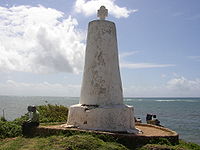
                                               Vasco Pillar on Malindi beach
We deal here with the Calicut portion of the story which starts with da Gama meeting Ibn Majid who entrusts him with the young pilot, Taufiq, before imploring Gama: 'Everybody robs India. Be frugal in your thefts'. Taufiq leads the fleet to the coast off Kappad (Capua) and the rest of the story follows closely recorded history.The fictional part involves two strands - the  tragic romance of Chirukandan, one of the Zamorin's ministers and Taufiq's dalliance with a young Muslim girl in Calicut. 

Unfortunately, both the sub plots fail to give local flavour of Calicut in the 15th Century. One can understand the limitation of the author, as there is not much vernacular source on the social history of Calicut. He appears to have depended mainly on Western sources (judging from the acknowledgements) and these sources have their limitations in terms of understanding and describing local milieu.

What is outstanding about the book is the sheer poetry of Daruwalla's prose : Taufiq's thoughts -...beyond all this is the sea: shell-encrusted sand, the roar of the high tide, the backwash, the undertow scrambling to pull back the lace, which the tide has left on the beach....The sea demands passion.

The novel's poetic ending deserves to be quoted: A certain Clive would have won a battle and yet been impeached, and Burke and Sheridan would have thundered against Hastings all the same, whether a Taufiq had guided one Vasco across the seas or no. There's something inexorable about history - also about gunpowder and gunboats.

Reference:
For Pepper and Christ - a novel  by Keki N.Daruwalla, Penguin (2009) India Rs.399


Read more ►

Monday, June 7, 2010

Calicut, Ooty and Jannat Biwi

13 comments
'What a glad moment it is, to be sure, when the sick and the seedy, the tired and testy invalid from pestiferous Scinde or pestilential Guzerat "leaves all behind him" and scrambles over the sides of his Pattimar.'
Thus begins the travelogue of Richard Burton recollecting his journey to Calicut and Ooty. (Please see http://calicutheritage.blogspot.com/2009/02/kamasutra-translator-in-zamorins-mankav.html)

Ever since Ooty was developed around 1830 as the favourite location for rest and recuperation (R&R) for British soldiers (much like Bangkok and Manila for US soldiers during the Vietnam wars) Calicut started receiving 'the sick and the seedy, the tired and testy' British soldiers from the Sikh and Afghan campaigns who would be sent on long R&R vacations to the salubrious hill station. Usually, they would land by sea at Calicut and take either the Nilambur or Mettuppalayam route. Burton himself was on R&R from Sindh and spent six months
in Goa, Calicut and Ooty.

William Logan's 'Malabar' is perhaps the most authentic source of history of the place, particularly for the period after the fall of Tipu and Pazhassi. Yet, Logan does not mention Calicut as the route for the R&R crowd, except to mention casually that when there was a Hindu-Muslim conflict in November 1841, the District Collector of Malabar was 'away at Ootacamund', suggesting that not only British soldiers, but even civil servants headed for the Blue Mountains.

Writing in 1887, Logan states: 'Shortly after the close of the war with Coorg (in 1834) the district administration entered upon a period of disturbance, which unhappily continues down to the present time.'(page 623, Malabar Manual) Then follows a long list of 'outrages' perpetrated by the Mappilas on the Hindus, all attributed to the phenomenon of Haal ilakkam (religious frenzy). The narrative culminates with the gruesome murder of Conolly, the Collector.

Were all the disturbances involving Muslims during this period due to haal ilakkam? Or was Logan being selective in the narration to suit his thesis about land tenure and to make out a cogent explanation for Conolly's murder? The Jannat Biwi episode jerks the needle of suspicion a bit.

Around the same time that Burton had reached the shores of Calicut en route Ooty, another fatigued soldier, one Captain S.W. Partridge attached to the 18th Bombay Native Infantry was also travelling on recuperation to Ooty. But unlike Burton, the young Captain was accompanied by a young Muslim girl from Sindh, where he had been posted. Apparently, the soldier had enticed the young unmarried girl who had left her house. Her people had reportedly written to the Ponnani Maqdoom, Ahmad Musaliar.

On 16th February 1847, the Maqdoom's men surrounded the Ponnani Travellers' Bungalow where the couple (along with one major Craig and family) had been put up. The crowd of more than 300 Muslims managed to abduct the girl - who gave her name as Jannat Biwi - and took her to the house of the Maqdoom's wife.

Both Major Craig and Captain Partridge appealed for immediate Army action. But, the District Collector was the sagacious Conolly who recognised the potential for great damage unless the situation was handled carefully. In fact, he had himself recorded a similar instance which had happened a decade ago when he was not the District Collector of Malabar. Another adventurous British military officer on medical leave was travelling to Ooty and had engaged as his companion a Muslim woman of easy virtue. But before they could proceed, they were attacked by an irate mob in Calicut which managed to free the woman.

Mr. Conolly was, therefore, circumspect in taking action. The Tahsildar of Koottanad who had jurisdiction over the case was inclined to resort to military action, presumably under pressure from the Army officers. But Conolly deputed a Muslim Tahsildar, one Mr.Kuttoosa to assist the Koottanad Tahsildar. Kuttoosa managed to defuse the situation and arrested about 34 Muslims including the Muqdoom of Ponnani.

The arrested were produced before the District Magistrate on 21 February 1847. Conolly deputed his Assistant Collector, H.D. Cook to conduct an enquiry and report.

The case came up for trial before the sub judge Mr. T.W. Godwin in early March 1847. Subsequently, the case was transferred to the Court of the Sessions Judge, Mr.H. Morris. On 27 July 1847 the Judge convicted 18 persons for imprisonment for a term between 2 to 7 years. (Aside: How quickly cases were decided in those times when there was no 'fast-track court'!)

Maqdoom himself was convicted for 3 years and sent to the Chengalpet jail under escort. Both the Madras Government and the Board of Directors of the East India Company confirmed the sentence as necessary for maintaining the rule of law. The only aggrieved persons, other than the accused, were the two Army officers who protested against the soft treatment meted out to the religious head.

Obviously, the above two cases could not have been isolated. It is possible that young Army officers (mostly bachelors) would have been looking for and acquiring companions to take with them to Ooty on R&R. After all, Burton himself was bored stiff during his R&R and has left a vivid description of the type of female company that was available for the young bachelors in Ooty: 'Among the ladies, we have elderlies who enjoy tea and delight in scandal:grass widows... and spinsters of every kind, from the little girl in bib and tucker, to the full blown Anglo-India young lady, who discourses of her papa the Colonel, and disdains to look at anything below the rank of a field-officer'! No wonder, Burton left Ooty much before the end of the furlough, casting 'one last scowl upon Ootacamund, not, however, without a grim smile of joy at the prospect of escaping from it'.

Was Logan glossing over these incidents of transgression by British men in uniform or was he being selective in only reporting cases which suited his thesis? How many of the 38 cases attributed to Haal Ilakkam during this period could have been legitimate social protest? More research may be called for. We should also research the impact on colonial Calicut of the opening up of Ooty as the premier R&R centre in India.

Reference:
1. W.Logan : Malabar Manual
2. R.Burton : Goa and the Blue Mountains
3. Husain Randathani (Ed) : Makhdoomum Ponnaniyum (1998)
4. Mollie Panter-Downes : Ooty Preserved (1967)

Read more ►

Monday, May 31, 2010

Calicut Railway - some more details

6 comments
Reader Devasahayam wanted to know whether the old Beypore Railway Station exists any longer. Sadly, the building has disappeared long ago, leaving only a large fresh water well which was dug for supplying water for the steam engines.

Fortunately, we have an old photograph of the Beypore Railway Station furnished by another reader, Calicocentric. As he explains, this photograph used to be on the British Library Museum site but has somehow disappeared from there. We thank Calicocentric and reproduce the photograph, acknowledging the copyright of the British Library Museum.


Premnath has furnished another priceless photograph of the stagecoach crossing the Dharmadom river with passengers. Here it is!
Read more ►
Powered by Blogger.